
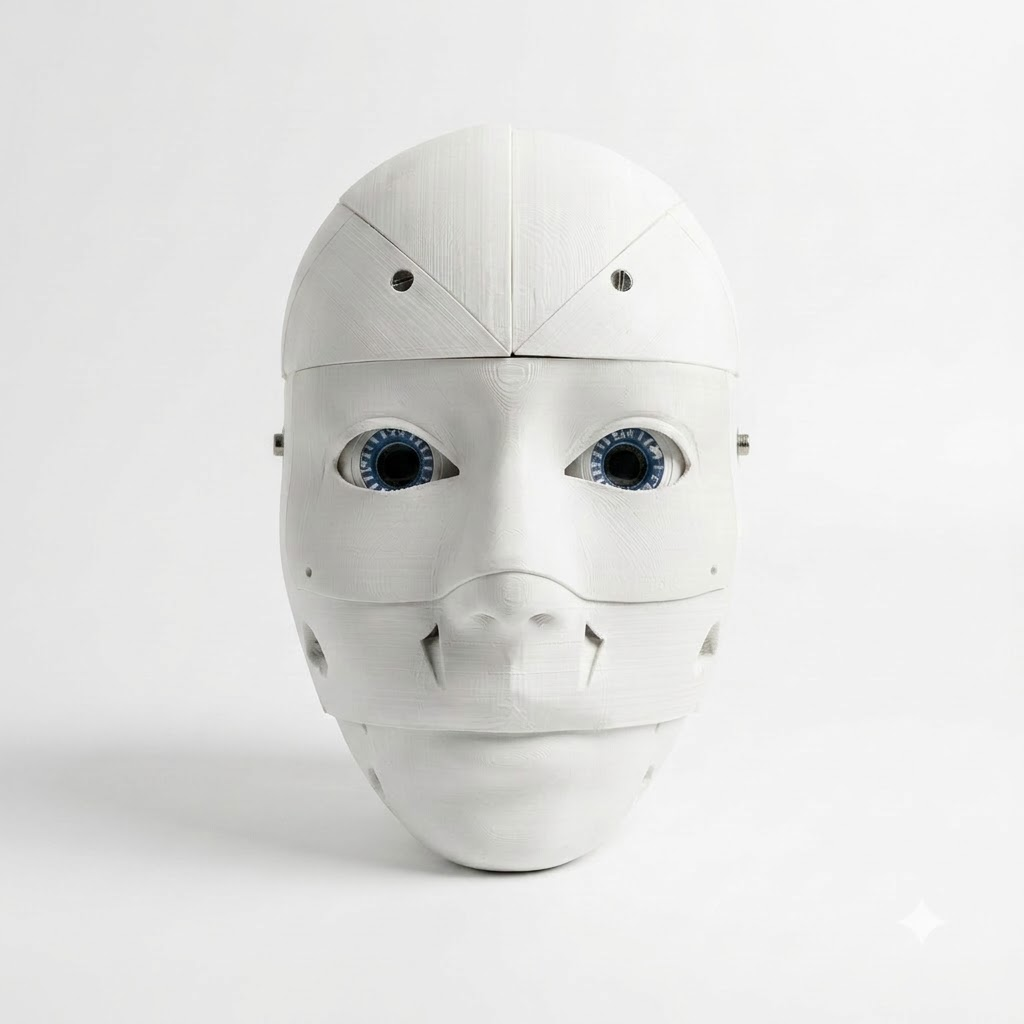
Why 3D printing here
From a single bracket to a whole robot
Robotics moves fast — geometry changes with every design review, and off-the-shelf parts rarely fit. 3D printing lets you iterate the mechanics in days, keep the build light, and produce structural parts and custom housings without tooling.
- Lightweight chassis panels, covers and structural frames
- Robot arm links, grippers and end effectors
- Gearbox, actuator and servo/motor mounts
- Sensor, camera and LiDAR housings and cable guides
- Full humanoid, animatronic and companion-robot bodies
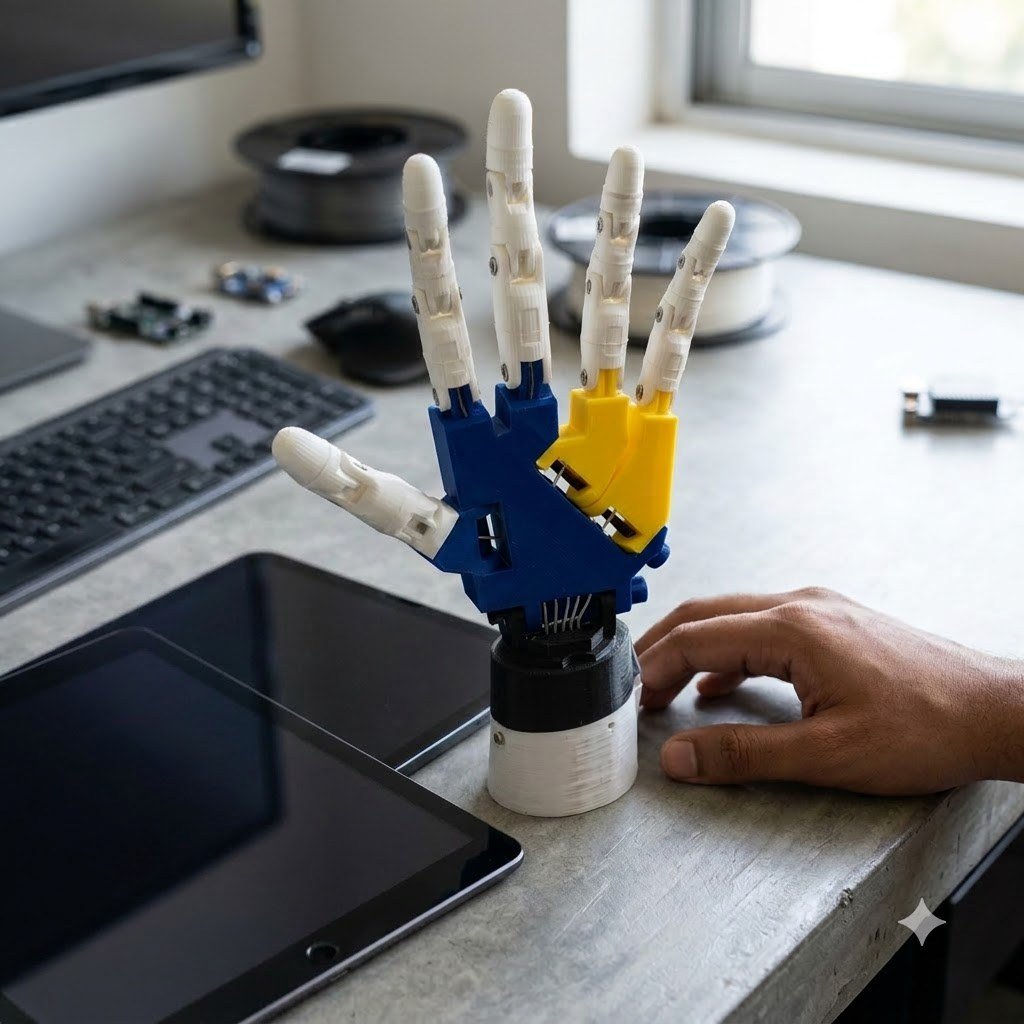
What we produce
Parts that carry loads and hold tolerance
Chassis & shells
Body panels, covers and structural frames — printed in sections and bonded for large builds.
Grippers & end effectors
Custom jaws, fingers and tool mounts tuned to the part your robot has to pick and place.
Actuator & gearbox mounts
Servo, stepper and motor brackets, gear carriers and bearing blocks that stay rigid under load.
Sensor & camera housings
Mounts and enclosures for cameras, LiDAR, ultrasonic and IMU boards, with clean cable routing.
Strong, light materials
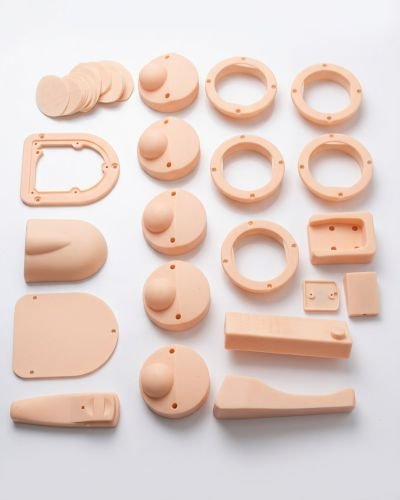
SLS and carbon-filled nylon for structure, tough resin for detail — matched to each part's job.
Fast design iterations
Revise the mechanics, reprint overnight, and test the next version on the bench the same week.
Case study
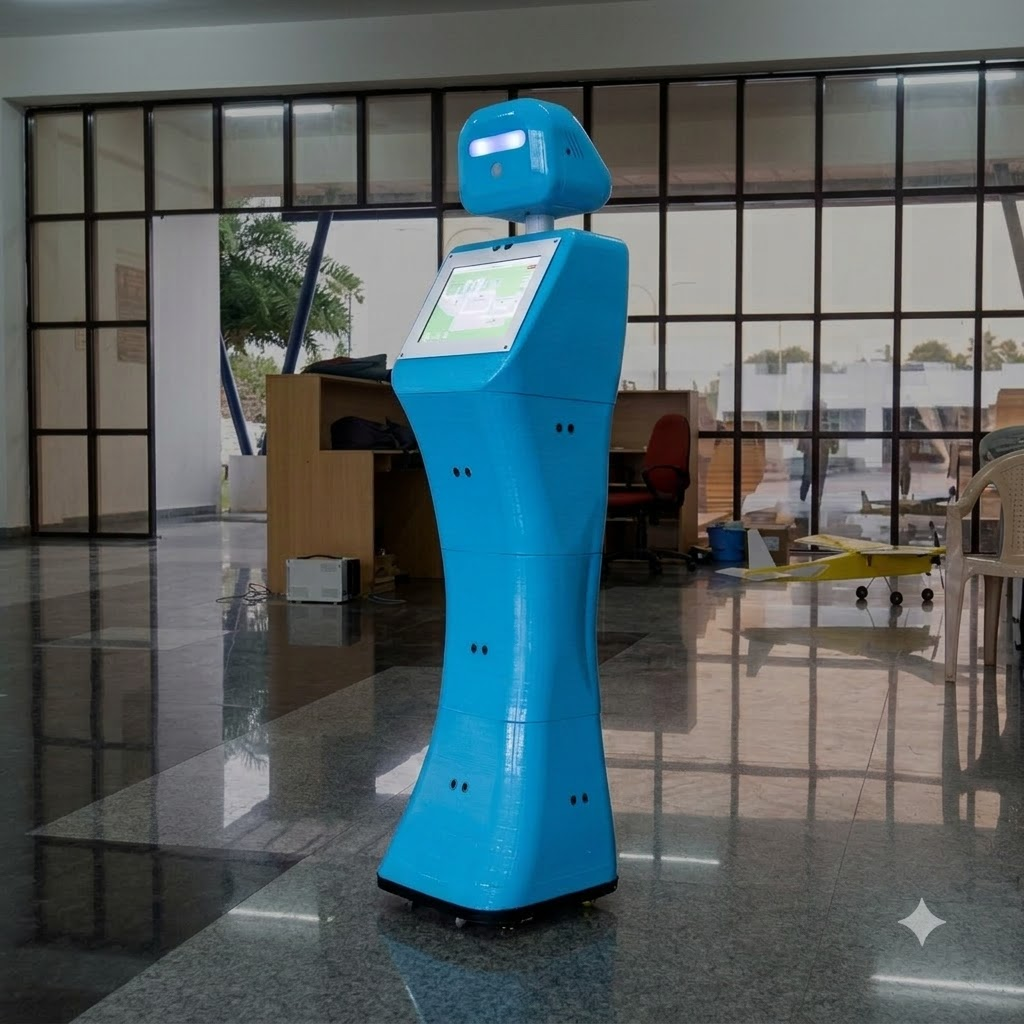
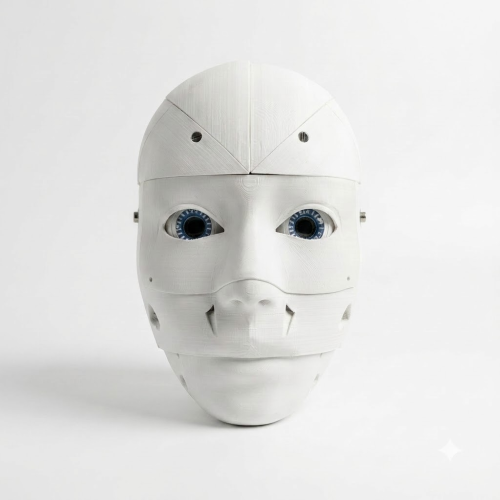
Smaro — a campus companion robot
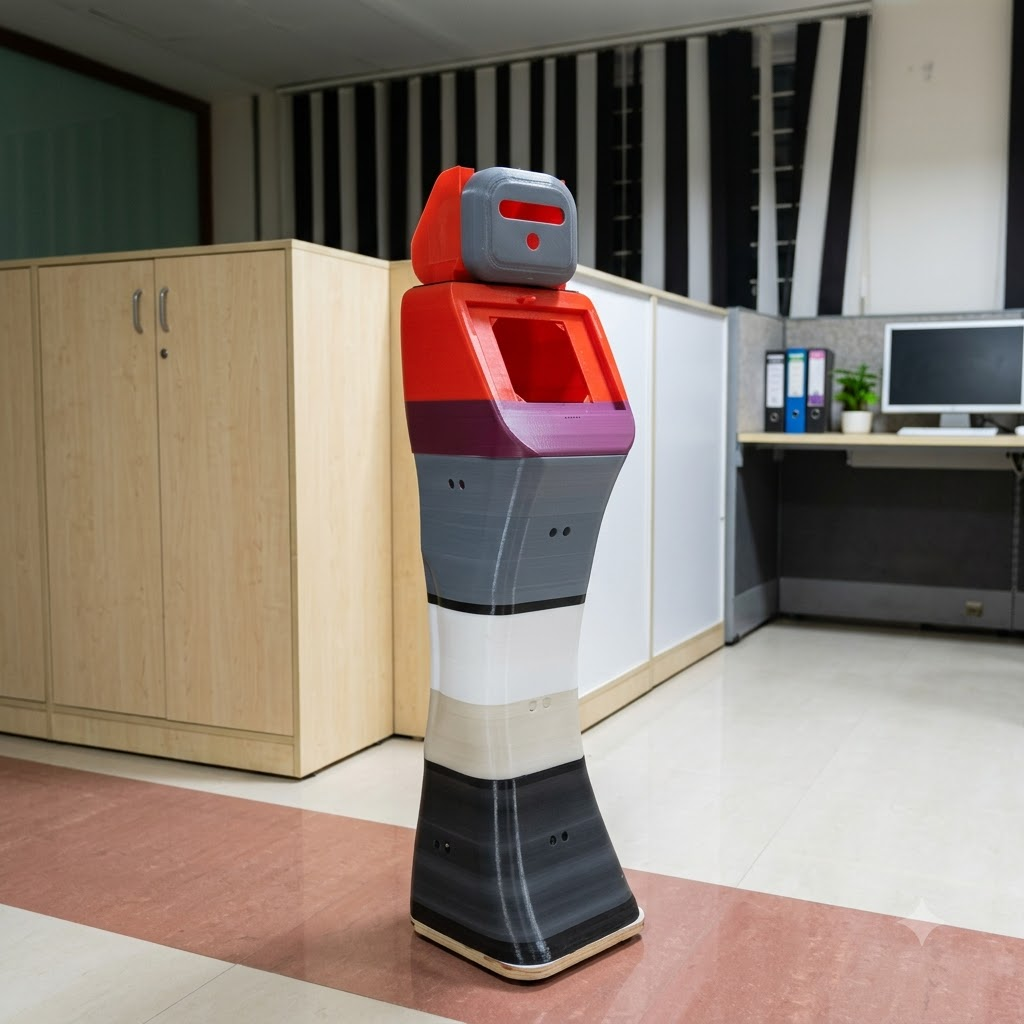
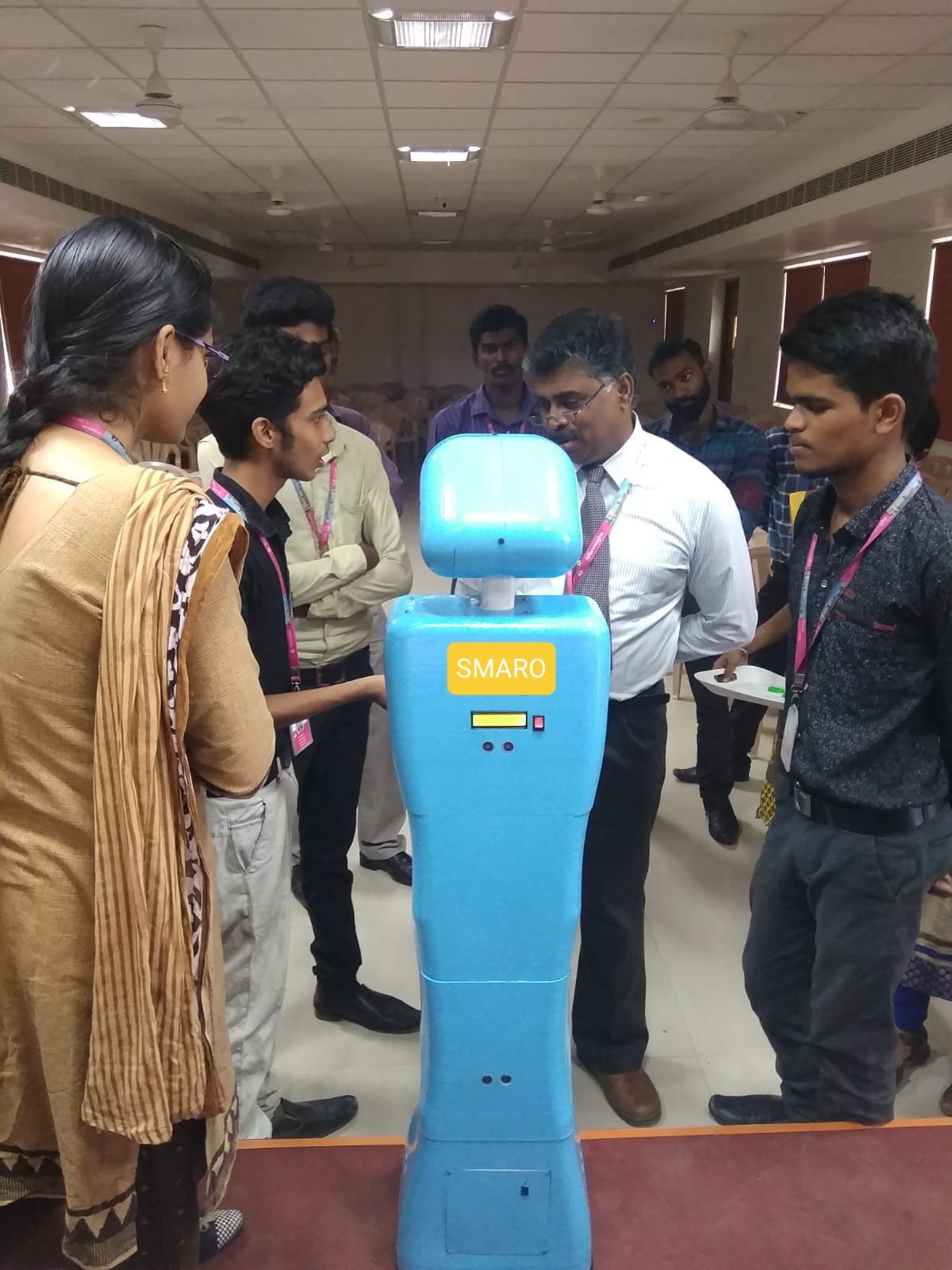
We designed and 3D printed the full body of Smaro, an autonomous companion robot for a college campus in Tamil Nadu — combining a custom printed shell with sensors, autonomous mobility and human interaction.
Gallery
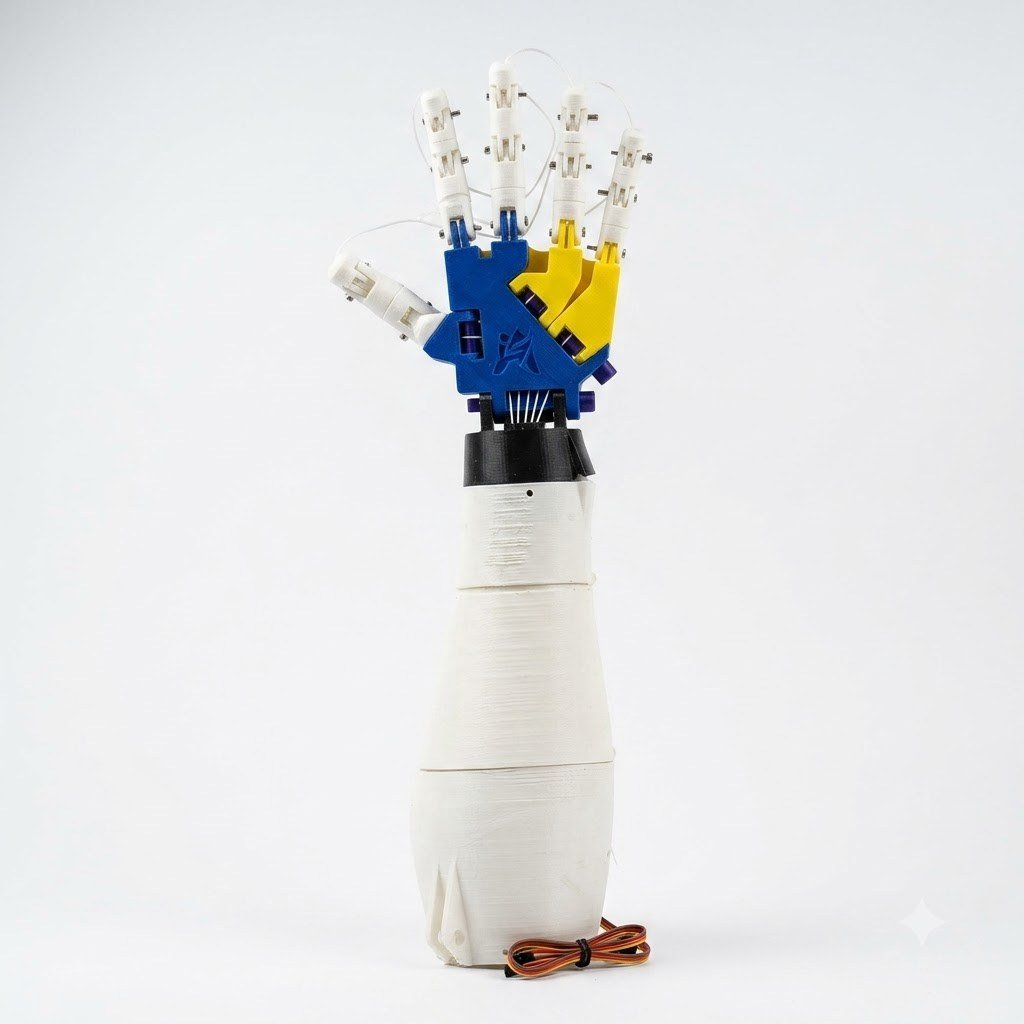
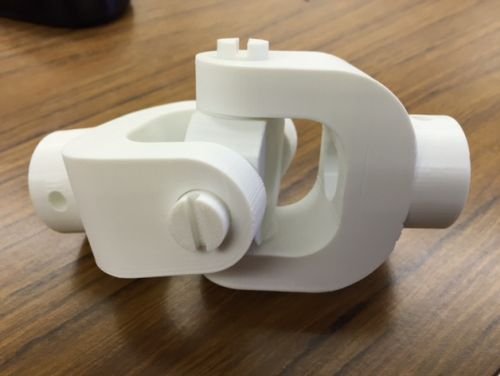
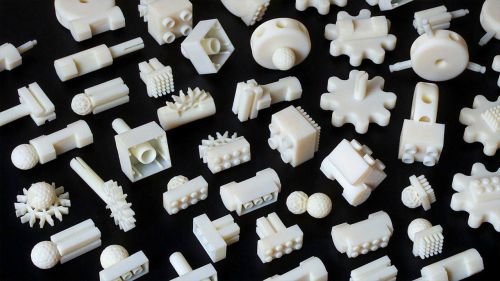
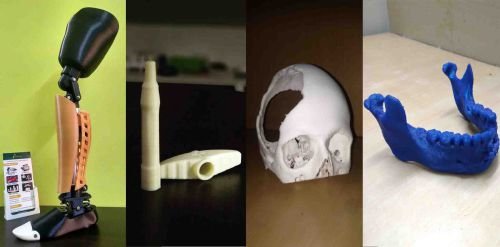
Robots and robot parts we've printed
Good to know
Frequently asked questions
What robot parts can you 3D print?
Chassis panels and shells, robot arm links, grippers and end effectors, gearbox and actuator mounts, servo and motor brackets, sensor and camera housings, cable guides, and full humanoid or companion-robot bodies printed in sections and assembled.
Which materials do you use for functional robot parts?
SLS nylon (PA12) and carbon-filled nylon for structural, load-bearing parts; tough and ABS-like resins for detailed housings and gears; standard PETG or ABS for covers and jigs. We recommend a material based on the load, wear and weight budget of each part.
Can you print a whole robot body, not just parts?
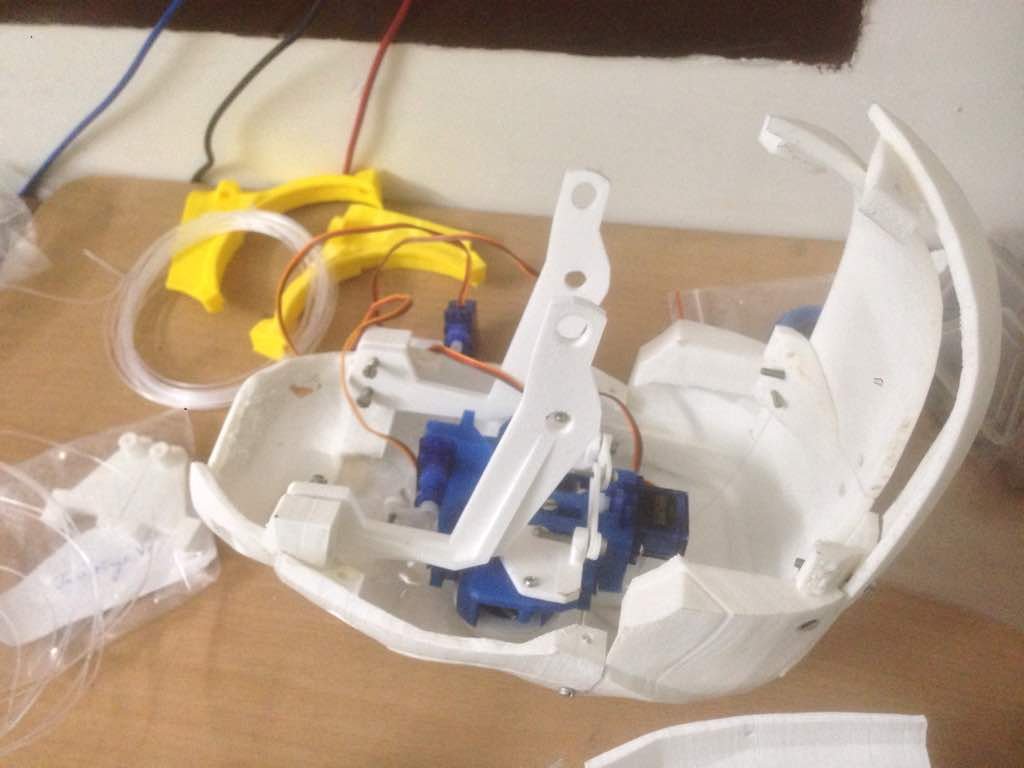
Yes. We have built complete robots — including an autonomous campus companion robot and InMoov-style humanoids — printing the body in sections, bonding and finishing it, and fitting it around the customer's electronics, actuators and drivetrain.
Do you help with design for 3D printing?
Yes. Send an STL or a STEP model, or a sketch and your requirements. We check wall thickness, splits, fastener bosses and print orientation, suggest changes for strength and weight, and share the prepared model before printing.
Building a robot? Let's print it.
Send a CAD model, a sketch or a parts list and we'll come back with a printability check, material advice and a quote.