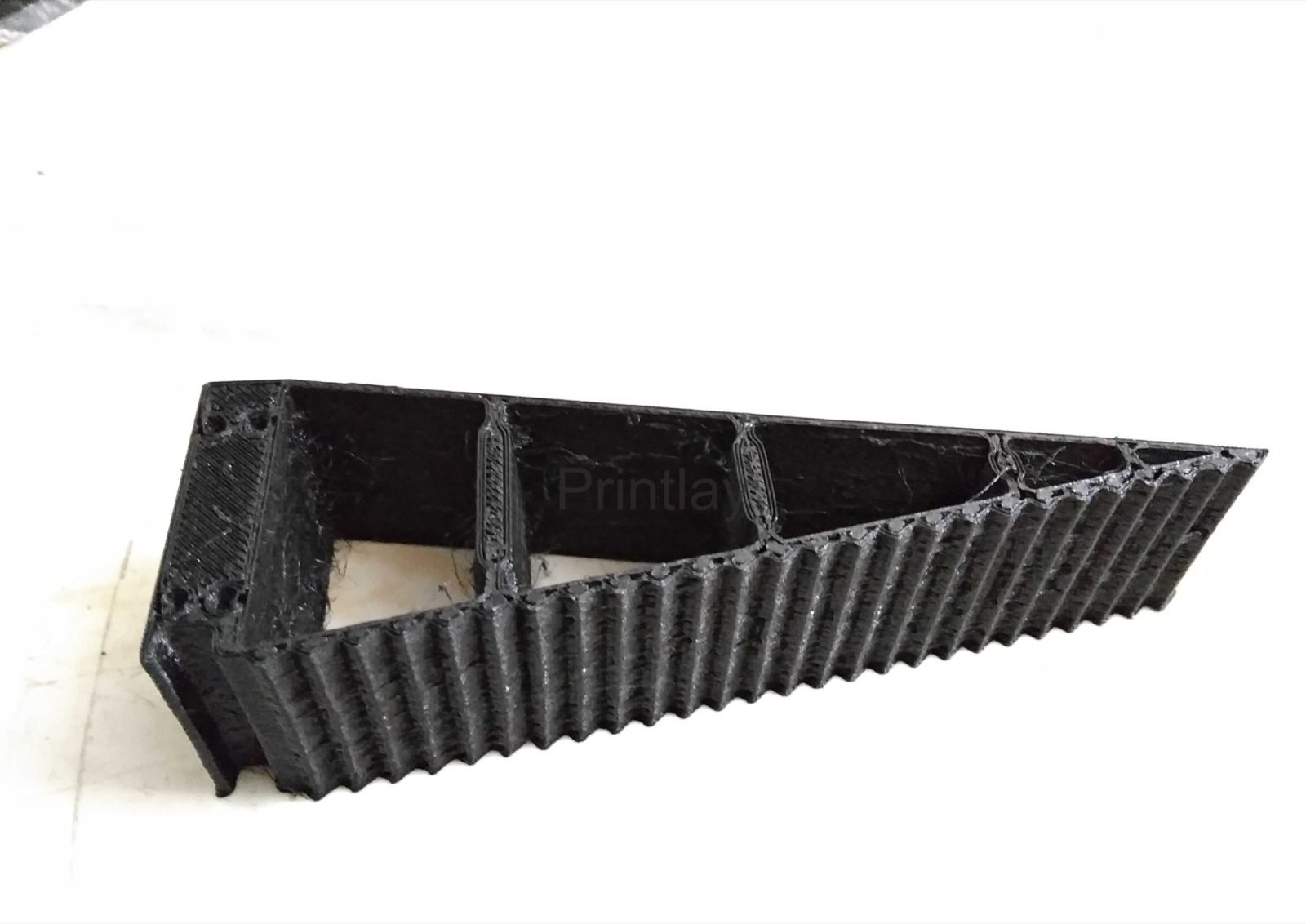
What it is
Bendable, stretchable, shock-absorbing parts — straight from CAD
Flexible 3D printing produces soft, elastic components without any tooling. Print gaskets, grips, hinges and dampers in the exact geometry you need, in a range of hardnesses, and iterate the design in days rather than weeks.
- Shore 30A to 95A across FDM, SLS and resin processes.
- Airtight and watertight parts, living hinges and repeated-flex features.
- Tune apparent stiffness with wall thickness and infill.
- 1–200 off economically; step up to moulding for larger runs.
Materials
Flexible materials & hardness
Durometer is measured on the Shore A scale — lower is softer. We pick the grade to match feel, function and process.
Elastomeric resin (SLA)
Softest option. Smooth surface and fine detail — lip seals, soft-touch pads, anatomical models.
Elastomeric resin (SLA)
Firmer resin with good rebound — bushes, grommets, cushioning.
TPU (FDM)
Bends easily, springs back. Grips, straps, protective sleeves, flexible brackets.
TPU (SLS)
Isotropic, no supports, sealed surface. Complex ducts, bellows and batch gaskets.
TPU (FDM)
Firm and tough with slight give. Wheels, feet, bump stops, thin airtight gaskets.
Applications
What flexible printing is good for
Technologies
Three ways we print flexible
FDM — TPU filament
Most economical, good for larger parts and firm grades (85A–95A). Layer lines visible; needs support on overhangs.
SLS — nylon-TPU
No supports, isotropic strength, sealed surface. Best for complex geometry, bellows and small batches.
SLA / DLP — elastomeric resin
Softest grades, finest detail and the smoothest finish — ideal for soft seals and cosmetic soft-touch parts.
Design guidance
Designing for flexible parts
- Choose the Shore hardness first — it drives material and process.
- Keep FDM TPU walls at least 1.5 mm; thinner is possible on SLS and resin.
- Use infill density to fine-tune stiffness without changing material.
- Radius internal corners to avoid tear-initiation points.
- Expect some support witness marks on FDM — place them on non-critical faces.
Print or mould?
When to switch to moulding
3D print for 1–200 parts, complex one-offs and design iterations. Move to silicone moulding for 10–1000 rubber copies, and injection moulding once you are into the thousands.
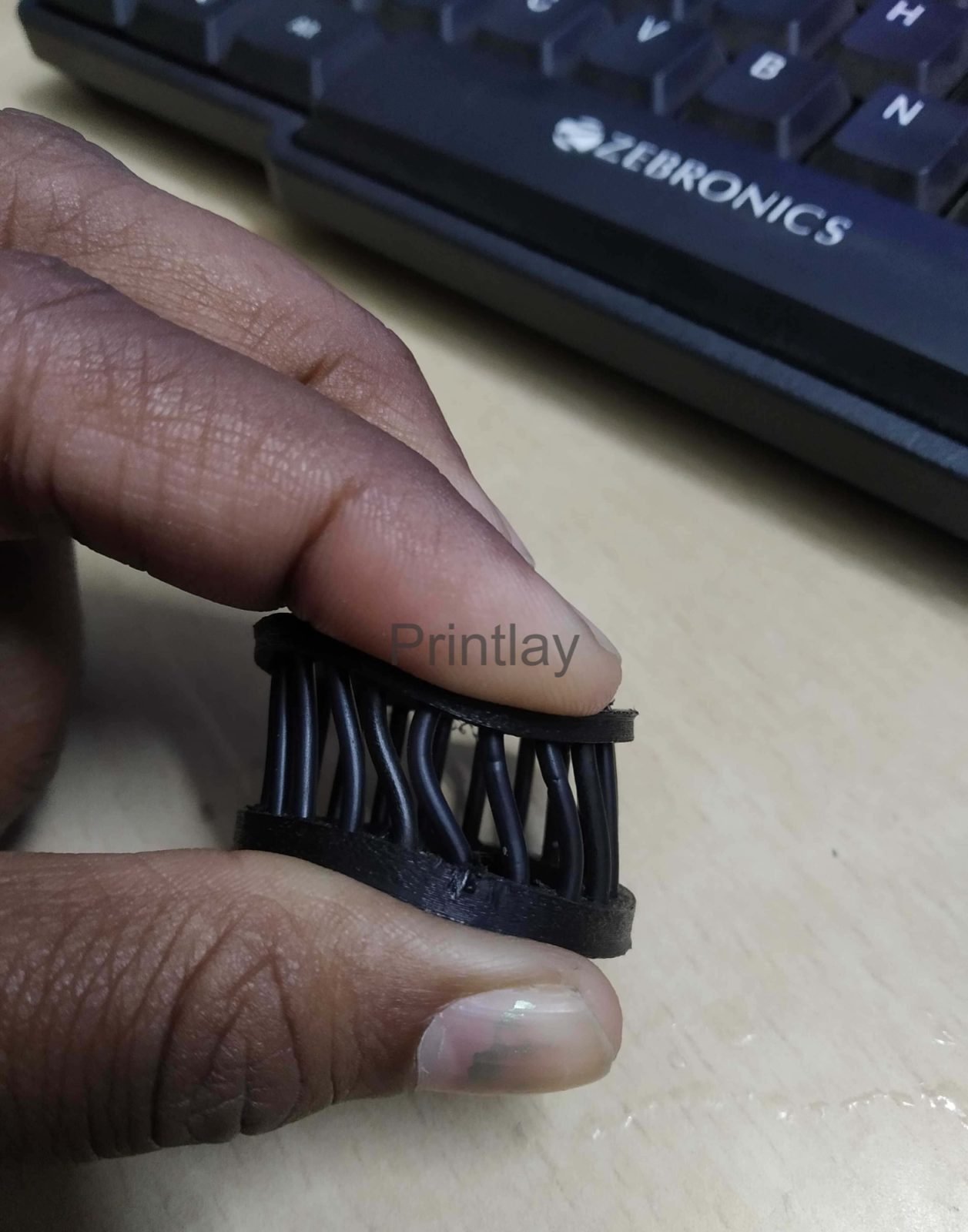
In action
See it flex
FAQ
Common questions
How soft can a flexible 3D print be?
From roughly Shore 30A (a soft eraser) up to Shore 95A (a shopping-trolley wheel). Elastomeric SLA resin covers the softer end; TPU on FDM and SLS covers the mid to firm range.
Which material should I use for a gasket or seal?
TPU 85A to 95A prints airtight, thin-wall gaskets well on FDM, and SLS TPU is ideal for complex or batch gasket geometry with no support marks. For very soft lip seals, elastomeric resin is better.
Can you match a specific Shore hardness?
We match to the nearest available material grade and can tune apparent stiffness further through wall thickness and infill. Send the target durometer and the part function and we will recommend a grade.
Are flexible prints watertight and airtight?
SLS and resin parts are effectively sealed. FDM TPU can be printed watertight with the right wall count and settings, and can be post-sealed if needed.
I need a few hundred rubber parts — print or mould?
Up to about 200 parts, printing is usually faster and cheaper. Above that, silicone moulding or vacuum casting gives lower per-part cost, and injection moulding takes over in the thousands.
Related services